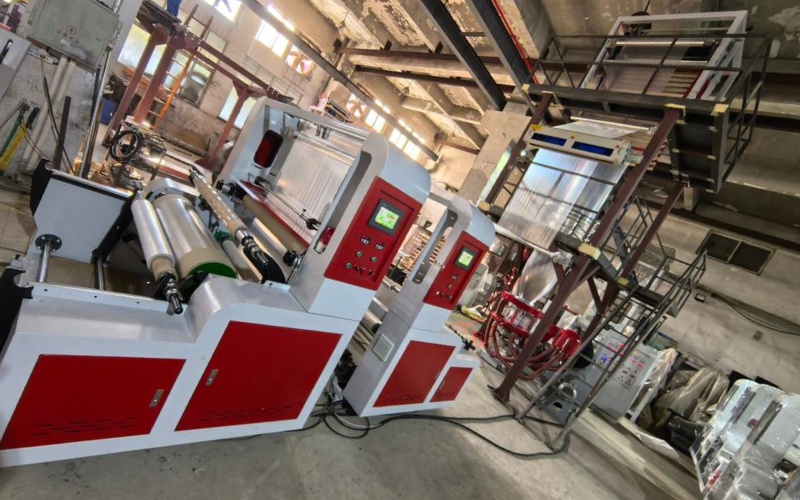
You might see the bubble in your Blown Film Machine start to shake, move quickly, or even fall apart. Bubble instability happens when the bubble made during extrusion cannot keep its shape. This problem causes the film to be uneven, scratched, or torn. If the bubble droops or shows draw resonance, the film quality gets worse and production slows down. Operators often notice things like bubble breaks, strain hardening, unstable frost lines, or bubble fluttering. Acting fast helps you find these problems and fix the bubble so it stays steady.
Symptom | Description |
Bubble breaks | Happens when the melted material is stretched too much, causing the bubble to break. |
Strain hardening | Happens when the melted polymer is pulled too fast, making the pressure inside the bubble change a lot. |
Unstable frost line | The frost line height changes because the temperature is not even or the die is blocked. |
Bubble fluttering | Starts below the frost line and looks like straight marks on the bubble surface from fast air. |
Key Takeaways
Bubble instability can cause film to be uneven or torn. It can also make the film scratched. Spotting signs like bubble breaks and fluttering is very important. This helps keep the film good.
Changing air flow, melt temperature, and machine settings can help stop bubble instability. Checking these things often keeps the bubble steady. It also makes the film better.
Picking the right polymer is very important. Polymers with high melt viscosity and elasticity keep the bubble in shape. They also lower the chance of breaks.
Checking and fixing equipment often is important. Clean air rings and cooling systems for smooth work. This helps stop bubble problems.
Watching cooling and extrusion settings can help find problems early. Small changes can really help keep the bubble stable.
Bubble Instability In Blown Film
What Is Bubble Instability?
Bubble instability happens when the bubble cannot keep its shape. The bubble might shake, droop, or change size. You may see the film get wider or thinner as the bubble moves. This problem makes the film uneven, scratched, or torn. There are many types of instability you can notice. These include draw resonance, helical snaking, frost line moving, bubble sagging, tearing, fluttering, and breathing.
Draw resonance makes the bubble move in and out and stretches the film unevenly.
Helical snaking twists the bubble and makes the film spiral.
Frost line moving changes where the bubble cools, so the film looks different.
Bubble sagging and tearing happen when the bubble droops or breaks apart.
Bubble fluttering and breathing make the bubble surface ripple or move in and out.
Some main things cause bubble instability. These are air flow rate, tension-stiffening, and melt elasticity. The table below shows how these things affect the bubble:
Factor | Description |
Air Flow Rate | More air cools the bubble faster, but too much air can change the bubble’s shape and make it unstable. |
Tension-Stiffening | Higher tension-stiffening helps the bubble stay steady. |
Melt Elasticity | More elasticity in the melt helps keep the bubble from becoming unstable. |
Why Bubble Instability Matters
Bubble instability is a big problem because it can ruin your film and slow down your work. You want the bubble to stay steady so the film is smooth and strong. If you do not fix bubble instability, the film can be uneven, have marks, or even tear. This wastes both material and time.
Operators and workers should look for signs like strain hardening, frost lines that move, bubble fluttering, and melt temperature that is not even. These problems can stop production and cost more money. The table below explains why bubble instability is so important:
Factor | Explanation |
Strain Hardening | Stretching the bubble too fast changes pressure and width, making the film uneven. |
Unstable Frost Line | Uneven temperature moves the frost line and changes how the film looks. |
Bubble Fluttering | Fast air makes marks on the bubble, which lowers film quality. |
Non-Uniform Melt Temperature | Different cooling and die speeds make the film thickness change in waves. |
Interfacial Instability | Problems between layers can make the bubble break or ripple. |
Tip: You can stop bubble instability by checking your air flow, melt temperature, and machine settings often. This helps keep the bubble steady and your film good.
Common Blown Film Issues: Types Of Bubble Instability
You face many common blown film issues when working with a blown film machine. Each type of bubble instability creates unique problems for film quality. You need to spot these issues quickly to keep production running smoothly.
Draw Resonance
Draw resonance happens when the bubble’s diameter changes in a regular pattern. You see the film width and thickness go up and down, even if the machine speed stays the same. This problem often starts when you stretch the melt too fast. The film may show waves or ripples. You notice uneven thickness and wrinkles along the film. Draw resonance can make the film look rough and weak.
Tip: Watch for sudden changes in film width or thickness. These signs help you catch draw resonance early.
Helical Bubble Instability
Helical bubble instability makes the bubble twist around its axis. You see the bubble snake or spiral as it moves up. This problem causes the film to have spiral marks and uneven edges. Helical instability often starts when the frost line is too low or the air ring settings are off. You may notice wrinkles forming in a spiral pattern.
Frost-Line Oscillation
Frost-line oscillation means the frost line moves up and down. The frost line is where the bubble cools and turns solid. When this line shifts, you get changes in film thickness and surface quality. Cooling air temperature, flow rate, and extrusion speed all affect frost-line oscillation. You may see weak spots or wrinkles near the frost line.
Factor | Effect on Frost-Line Oscillation |
Cooling air temperature | Changes how fast the bubble solidifies, causing height variations. |
Flow rate | Alters bubble shape and stability. |
Extrusion speed | Can mismatch with traction speed, shifting frost line height. |
Haul-off rate | Impacts film gauge and quality, leading to defects. |
Bubble Sag And Breaks
Bubble sag happens when the bubble droops or loses its shape. You see wrinkles and uneven thickness. Problems like excessive blow-up ratio, unstable take-off speed, or uneven cooling cause bubble sag. If the bubble stretches too much, it can break. You may notice the bubble snap off or form long wrinkles.
Uneven cooling air causes stress wrinkles.
Wrong extrusion temperature leads to bubble sag.
High blow-up ratio creates wrinkles and sagging.
Bubble Flutter And Breathing
Bubble flutter makes the bubble surface ripple or shake. You see straight marks or small wrinkles below the frost line. Bubble breathing means the air inside the bubble changes, causing thickness to vary. Cool air hitting the bubble and changes in air volume cause these problems. You may notice the film feels uneven or has waves.
Cause | Description | Solutions |
Bubble flutter | Cool air hits the bubble surface, making it ripple. | Raise freeze line, lower melt temperature, narrow die gap. |
Bubble breathing | Air volume inside bubble changes, causing thickness variation. | Control cooling system, reduce melt temperature, decrease extruder output. |
Strain Hardening
Strain hardening happens when you stretch the bubble too fast. The pressure inside changes, and the film gets uneven. You see wrinkles and weak spots. High melt strength polymers like LDPE help keep the bubble stable. If you use low molecular weight HDPE, you may see more problems with wrinkles and breaks.
Note: Choosing the right polymer blend helps reduce strain hardening and keeps the bubble steady.
You need to watch for these common blown film issues every day. Spotting bubble problems early helps you fix them before they ruin your film.
Causes Of Bubble Instability In Blown Film Machine
Uneven Temperature Distribution
Bubble instability can happen if the extruder gets too hot or cold. When the temperature is not even, the melt temperature changes. This makes the bubble cool at different speeds. The mold may not work well. If the frost line moves, the bubble can lose its shape. Bad melting inside the extruder causes uneven cooling. This makes the bubble unstable. If the film does not look even, check the temperature zones. Also, look for dirt or water in the resin.
Air Ring Alignment Problems
The air ring helps keep the bubble steady. If it is not set up right, air does not cool the bubble evenly. You might see the bubble twist or sag. The air ring should send cold air all around the bubble. This helps the bubble keep its shape. If you see dirt or uneven cooling, check the air ring first. Good alignment stops bubble problems and keeps the film even.
Cooling Airflow And Extrusion Rate
You can change the bubble’s stability by adjusting airflow and extrusion rate. If you raise the take-up ratio or blow-up ratio, you may get more bubble problems. Too much or uneven airflow makes the bubble shake or ripple. Use special monitors to find these problems early. Watch for dirt in the cooling system. Dirt can block airflow and change how the extruder works. Keep the extrusion rate steady to stop bubble breaks and keep the film even.
Uneven airflow makes the bubble unstable.
High extrusion rates stretch and break the bubble.
Dirt in the cooling system changes how the bubble forms.
Die Design And Pressure Control
Die design and pressure control help stop bubble problems. If material viscosity or air pressure changes, the bubble may lose its shape. Keep resin moisture below 0.02% in the extruder. Make sure the screw temperature stays even. Use automatic pressure regulators for steady air flow. Internal Bubble Control systems help keep the bubble width and shape steady. These systems lower dirt, make the film even, and help you make more film.
Keep resin moisture low to stop bubble problems.
Use automatic pressure regulators for steady air flow.
Internal Bubble Control systems help keep the bubble steady.
Troubleshooting Bubble Instability On Blown Film Machine
When you operate a blown film machine, you want to keep the bubble steady and the film quality high. You can fix bubble instability by following clear steps for each part of the process. Here are practical solutions you can use right away.
Adjusting Air-Ring Settings
You need to check the air ring often. The air ring controls how cool air flows around the bubble. If the air ring is not centered, the bubble can twist or sag. You should:
Make sure the air ring is aligned and centered.
Inspect for blocked or crimped supply hoses.
Check that chilled air temperatures stay constant.
Look at the bubble cage and confirm it is tight and centered.
Adjust the collapsing frame angle if you see wrinkles on the film edges or center.
Tip: A well-aligned air ring helps keep the bubble stable and stops spiral marks or uneven edges. If you notice the bubble moving or shaking, check the air ring first.
Step | What To Do |
Air ring alignment | Center the air ring and check for even airflow. |
Chilled air temperature | Keep air temperature steady and inspect hoses for blockages. |
Bubble cage | Tighten and center the cage to support the bubble. |
Collapsing frame | Adjust the angle to remove edge or center wrinkles. |
Reducing Melt Temperature
You can control the extrudate melt temperature to help the bubble stay steady. If the melt gets too hot or cold, the bubble can become unstable. You should:
Monitor the barrel zones and keep the temperature even.
Avoid setting downstream temperatures more than 25°F below the melt temperature.
Make sure the melt flows smoothly to the die lip.
Check that the last barrel zone does not override its temperature setting.
When you keep the extrudate melt temperature uniform, you stop gauge bands and keep the bubble from shaking. You also help the film cool evenly, which makes the film stronger.
Note: If you see gauge bands or uneven thickness, check the extrudate melt temperature settings right away.
Inspecting Cooling And Extrusion Parameters
You need to look at cooling and extrusion settings to find the source of bubble problems. Stable cooling and extrusion rates help the bubble keep its shape. You should:
Set up temperature gradients based on the melting point of your material.
Use pressure sensors to watch die head pressure in real time.
Fix any big changes in pressure by checking molds, filter screens, and melt pumps.
Keep the extrusion rate steady to avoid stretching or breaking the bubble.
Watch for dirt in the cooling system, which can block airflow.
Parameter | What To Check |
Temperature gradients | Match settings to material melting point. |
Die head pressure | Use sensors and fix big changes fast. |
Extrusion rate | Keep output steady for even film. |
Cooling system | Clean out dirt to keep airflow smooth. |
Tip: If you notice the bubble fluttering or breathing, inspect cooling airflow and extrusion rate. Small changes can make a big difference in bubble stability.
Optimizing Die Design
Die design plays a big role in keeping the bubble stable. You want even heating and good airflow. You should:
Use a dual lip air ring to focus cooling and solidify bubble layers at the same time.
Try oscillating air ring versions to handle viscosity changes and absorb shocks.
Make sure the die heats evenly inside and the air ring design matches your film needs.
Keep the cooling air flow rate steady to support bubble stability.
Real-world tests show that dual lip air rings can cut bubble instability by two-thirds compared to single lip systems. You can keep thickness differences under 0.75% even at high speeds. This helps you make strong, even blown film.
Tip: If you see spiral marks or thickness changes, look at your die design and air ring type. Upgrading these parts can improve film quality and reduce downtime.
When you follow these steps, you can fix bubble instability quickly. You keep the bubble steady, control tension, and make sure winding tension stays right. You also protect the quality of your blown film and avoid costly breaks or defects. Always check your blown film machine settings, watch the extrudate melt temperature, and adjust tension as needed. These actions help you run your blown film machine smoothly and produce high-quality film every day.
Preventing Bubble Instability In Blown Film
Polymer Selection Tips
Picking the right polymer helps keep the bubble steady. Each polymer acts differently when you make blown film. Some polymers help the bubble hold its shape better than others. Look at the table to see how each property matters:
Property | Influence on Bubble Stability |
Melt Viscosity | Polymers with higher melt viscosity resist changing shape, so bubbles stay stable. |
Elasticity | Elastic polymers bounce back after stretching, so bubbles do not break easily. |
Shear Sensitivity | Polymers that react to shear can break down fast, making bubbles unstable. |
If you pick a polymer with high melt viscosity and good elasticity, your bubble stays strong. Do not use polymers that fall apart when stressed. Always choose a polymer that fits your machine and product.
Equipment Maintenance
Taking care of your blown film machine helps stop bubble problems. You should do these things:
Maintenance Practice | Description |
Design Optimization | Change setups to avoid shapes that make bubbles form. |
Material Choice | Pick materials that block gas and have surfaces that do not trap bubbles. |
Flow Control | Use controllers to keep pressure steady and lower bubble risks. |
Active Degassing | Use devices that stop bubbles from forming and remove any that appear. |
Passive Bubble Removal | Add bubble traps to catch bubbles before they reach important parts. |
Check your machine for leaks or worn-out parts. Clean and look at air rings, dies, and cooling systems often. Good care helps the polymer move smoothly and keeps the bubble steady.
Process Optimization
You can stop bubble instability by changing your process settings. Try these steps:
Keep heating zones at the same temperature. This melts the polymer evenly.
Set screw speed to match the polymer. Too much speed can break the polymer.
Adjust air volume and pressure. This keeps the bubble smooth and stops wrinkles.
Watch for changes in film thickness or surface. Make small fixes if you see problems.
Tip: Even small changes in temperature or air flow can help the bubble stay steady. Always watch your process closely.
If you pick the right polymer, take care of your equipment, and control your process, you lower the chance of bubble instability. This helps you make good blown film every time.
You can help your blown film machine work well by doing these things. Make sure the air ring is lined up right. Keep the melt temperature steady. Clean the cooling system often. Look for bubble instability signs every day. Here is a simple checklist:
Check the air ring and cooling airflow.
Watch the melt temperature zones.
Clean and take care of your equipment.
Go over process settings often.
Keep paying attention and try to learn new ways to work. Training often helps you stop problems and make better film.
FAQ
What causes the bubble to break during blown film production?
You often see bubble breaks when you stretch the melt too much or cool it unevenly. High extrusion rates or wrong air ring settings can also cause breaks. Check your process settings and keep everything steady to prevent this issue.
How can you quickly spot bubble instability?
Look for signs like shaking, sagging, or ripples on the bubble. Uneven film thickness or spiral marks also show instability. Use regular visual checks and monitor film quality to catch problems early.
Which polymer works best for stable bubbles?
Polymers with high melt viscosity and good elasticity work best. LDPE usually gives you a stable bubble. Avoid polymers that break down easily under stress.
What should you do if you see frost-line oscillation?
Lower the cooling air temperature and slow down the extrusion speed. Check the air ring alignment. These steps help you keep the frost line steady and improve film quality.


