You can see a clear difference between post-industrial and post-consumer recycling. Post-industrial recycling takes waste from factories. Post-consumer recycling collects things people throw away. This difference matters for sustainability. Using both types means we need fewer new resources. It also helps us make less waste. Studies show mixing post-consumer and post-industrial materials in packaging is better for the environment. The right Recycling Machine helps you handle each type well. It also helps build a stronger circular economy.
Key Takeaways
What Is Post-Industrial Recycling?
Definition and Sources
Factories reuse their own waste. They take leftover scraps and extra pieces. They also use defective products from making things. These materials come from the factory before people buy them. Post-industrial waste is clean and sorted. It is easy to recycle. Factories use a recycling machine to collect and process waste. When you buy products made with post-industrial recycled materials, you help the planet.
Tip: Post-industrial recycling keeps good materials in use. It also lowers the need for new resources.
Key Materials
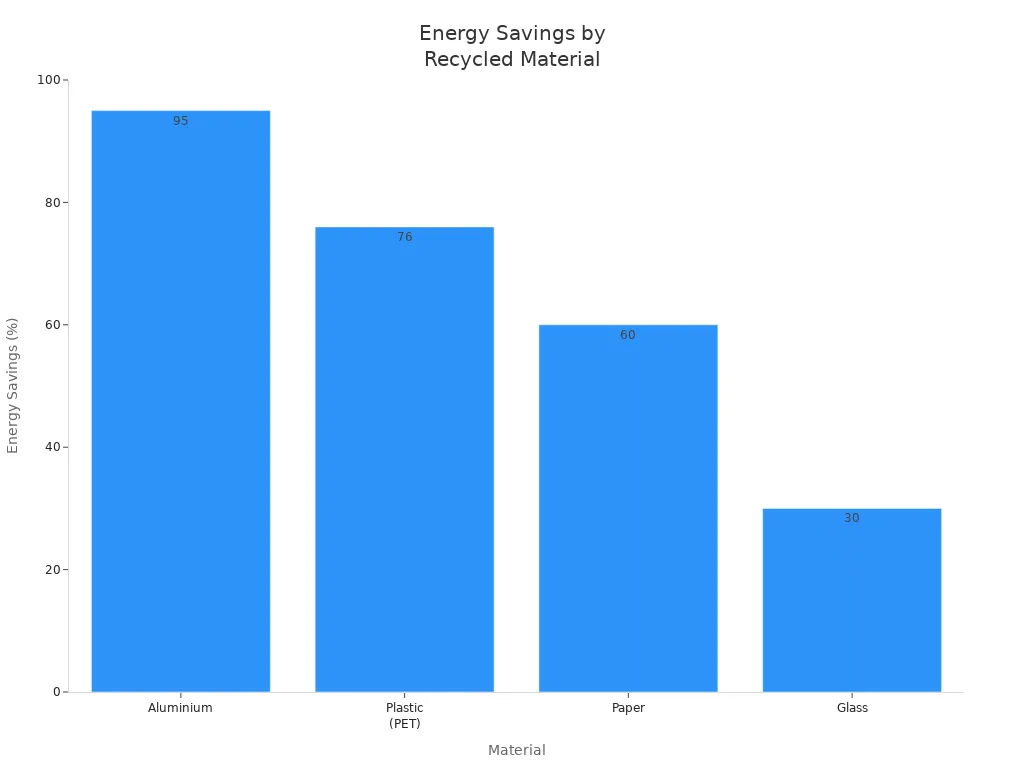
Factories make many kinds of post-industrial waste. You find post-industrial plastic, metal, paper, and glass in most factories. These materials are easy to recover. Recycling them saves lots of energy. The table below shows how much energy you save with post-industrial recycling:
Material | Energy Savings (%) | Energy Saved per Tonne (kWh) |
Aluminium | 95% | 14,000 |
Steel | 60%-74% | 1,400 |
Plastic (PET) | 76% | 7,200 |
Paper | 60% | 4,100 |
Glass | 30% |
|
Post-industrial plastic is recycled a lot. Factories also recycle metal scraps and paper trimmings. These materials go back into making new things.
Recycling Process
The recycling process starts with shredding the waste. The recycling machine breaks up plastic, metal, and other materials. Then, the machine washes and dries the pieces. After that, it makes pellets from the material. Factories reuse these pellets. Smart machines change settings by themselves. Energy recovery systems save heat and money. Post-industrial recycling works fast and well. Most factories put post-industrial plastic and other waste back into their production lines. This helps plastic recycling and lowers the need for post-consumer plastic.
What Is Post-Consumer Recycling?
Definition and Sources
You see post-consumer recycling in your daily life. This process uses things you finish using, like bottles and cans. It also includes packaging you throw away. Post-consumer recycling collects waste after it gets to you. You help by putting these items in recycling bins.
Post-consumer recycled content comes from finished products that would become solid waste.
You find these materials at home, school, or work. Some people, called informal waste pickers, collect post-consumer waste. They work hard and sometimes face unsafe conditions. After collection, workers sort and grade the materials. Then, they send them to recycling centers.
Post-consumer waste comes from things people use, not factories.
Post-consumer recycled content helps keep landfills from filling up.
Informal collectors are important for gathering post-consumer plastic and other recyclables.
Key Materials
You recycle many materials from post-consumer waste. The most common are plastics, paper, glass, and metals. Plastic recycling is important because you use plastic every day.
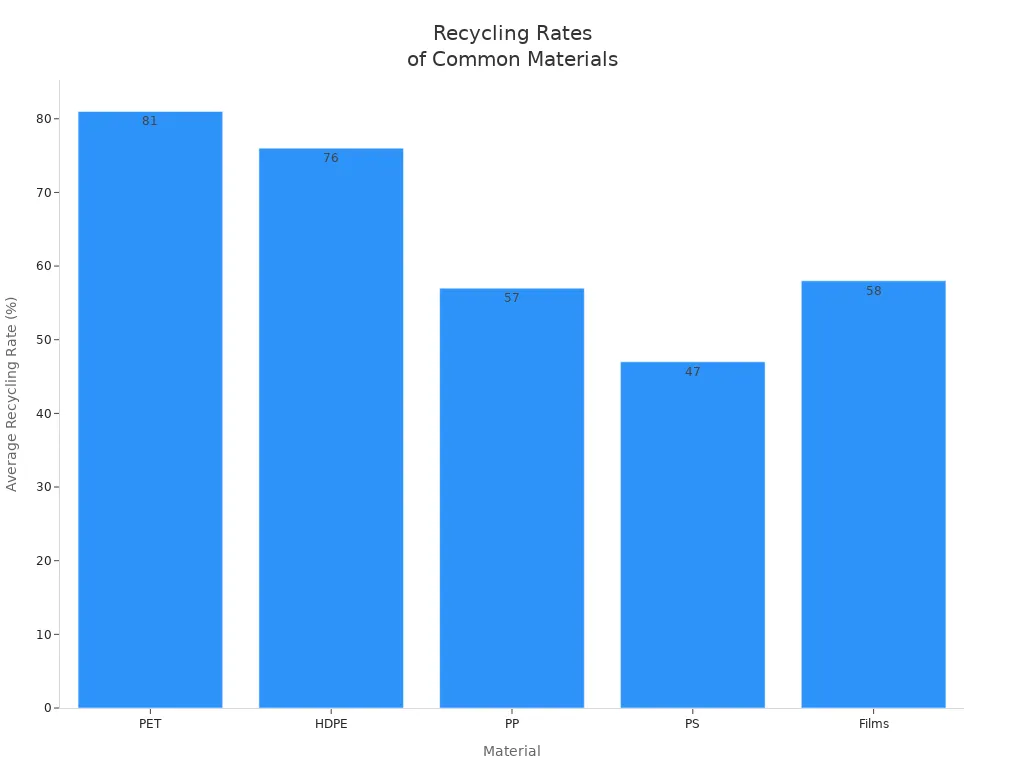
The table below shows how often you recycle different types of post-consumer plastic:
Material | Average Recycling Rate (%) |
PET | 81 |
HDPE | 76 |
PP | 57 |
PS | 47 |
Films | 58 |
PET and HDPE bottles get recycled the most. Post-consumer recycled materials help make new bottles and packaging.
Plastic Recycling Challenges
There are many problems with post-consumer plastic recycling. Post-consumer plastic often has a lot of contamination. Food, labels, and mixed plastics make recycling harder.
Contamination lowers the quality and safety of recycled materials, especially for food packaging.
Special recycling machines are needed to clean and sort post-consumer plastic. Post-consumer recycled content is harder to process than post-industrial waste.
Post-consumer plastic recycling costs more because you must separate many types of plastic. You can help by sorting your recyclables at home.
Post-consumer recycled products help the environment, but you must solve these problems to make recycling work.
Comparing Recycled Materials: Post-Industrial vs. Post-Consumer
Contamination and Purity
There is a big difference in how clean these materials are. Post-industrial materials come right from factories. Workers keep these scraps and leftovers clean. The factory is a controlled place. These materials do not need much cleaning before reuse. Post-consumer plastic and other waste come from homes, schools, and businesses. These items touch food, dirt, and other things. You must sort and wash them before recycling. This step takes more time and costs more money.
Here is a table that shows how cleaning works for each type:
Type of Recycled Material | Source | Purification Process | Contamination Risk |
Post-Consumer Recycled (PCR) | Waste from consumers | Requires sorting and cleaning | Higher due to product use |
Post-Industrial Recycled (PIR) | Manufacturing scraps | Minimal purification needed | Lower due to controlled environment |
Tip: You can help by sorting your plastic waste before recycling. Clean bottles and containers make plastic recycling easier.
Environmental Impact
Recycling post-consumer plastic helps the planet even more. It saves more energy and cuts more pollution than post-industrial recycling. Studies show that using post-consumer recycled PVC instead of new PVC saves about 2 tons of CO2 for every ton recycled. Post-industrial recycling saves about 1.8 tons. You also help keep plastic out of landfills and oceans.
Recycling post-consumer waste gives bigger environmental savings than post-industrial waste.
You save more CO2 when you pick products made from post-consumer recycled materials.
How far trucks travel and their size also change the impact. Shorter trips and bigger trucks lower pollution.
Note: Both types of recycling are good for the environment. You need both to build a strong circular economy.
Market Value
The price of recycled materials changes often. Post-consumer plastic and other recycled materials usually cost more than new materials. Some recycled polymers sell for 30-40% more than virgin plastic. People pay more because these materials help the planet and follow new rules. Post-industrial recycled materials come from factories. Their price and quality stay steady. Big companies like to use them because they do not change much.
Post-consumer materials come from things you use and throw away.
Post-industrial materials come from scraps in factories.
Prices for post-consumer recycled materials change a lot. They go up and down fast because supply and demand move quickly.
Sometimes, there is not enough post-consumer recycled material even when many people want it. This makes prices hard to guess.
Big users often pick virgin materials when post-consumer prices rise or quality drops.
Tip: You help the planet when you buy products made from both post-industrial and post-consumer recycled materials. You help cut waste and protect the environment.
Recycling Machines and Technology
Machines for Post-Industrial Recycling
Factories use special recycling machines for post-industrial recycled content. These machines handle clean scraps and leftover materials from making products. Many factories have modular recycling lines and cutter-compactor systems. These machines can process a lot of plastic waste very fast. The table below shows how much each machine can handle:
Machine Type | Throughput Capacity (kg/h) |
Modular Recycling Lines | 300 – 3,000 |
Cutter-Compactor Systems | Varies based on configuration |
Factories often pick cutter-compactor plastic recycling machines. These machines can recycle PE and PP materials without cutting them first. They make high-quality pellets for new products. When you buy things made with post-industrial recycled content, you help recycling. These machines work fast and keep recycled materials in use.
Machines for Post-Consumer Recycling
Recycling machines for post-consumer materials look different from others. These machines must sort, wash, and filter mixed plastic waste from homes and businesses. There are more steps because post-consumer recycled content has dirt, labels, and mixed plastics. The table below shows the main differences:
Factor | Post-Industrial (PIR) | Post-Consumer (PCR) |
Consistency | Usually stable by source and supplier | Often variable by batch and season |
Sorting intensity | Often minimal | Often required (metals, non-target polymers) |
Washing / water management | Sometimes reduced or skipped | Commonly required; water management becomes a system |
Moisture | Often lower and more stable | Often higher and less predictable |
Melt filtration | Basic filtration may be enough | Higher load; stronger filtration strategy often required |
Machines for post-consumer recycling use advanced washing and filtration. These machines remove dirt and make recycled materials better. You help recycling when you sort and clean your recyclables before putting them out.
Specialized Equipment for Plastic Recycling
Some recycling machines are made for tough plastics like nylon. Mechanical recycling uses machines to collect, sort, clean, chop, and melt plastic. This method can recover up to 60% of the material. Chemical recycling uses special machines to break down plastics into smaller parts or fuels. This method can recover over 90% of the material. These methods include pyrolysis, gasification, and enzymatic recycling.
Tip: You help plastic recycling when you buy products made from post-industrial recycled content and post-consumer recycled content. This keeps plastic out of landfills and oceans.
New recycling machines, like cutter-compactors and two-stage recycling lines, make recycling faster and better. Because of these machines, you see more recycled materials in new products.
Why the Difference Matters
For Businesses and Manufacturers
You have to choose between post-industrial and post-consumer recycled materials. Each one changes your costs, supply chain, and product quality. Post-industrial plastic is cleaner and simple to use. Post-consumer plastic helps recycling programs and the circular economy. The table below shows what you should think about:
Consideration | Post-Industrial Waste | Post-Consumer Waste |
Supply Chain Transparency | Less visibility into sourcing | More visibility, but requires auditing |
Traceability | Generally cleaner, but less impactful | Drives demand and innovation in recycling |
Aesthetic Quality | More consistent in quality | Often heterogeneous, leading to variability |
Impact on Circular Economy | Less impactful on recycling rates | Increases overall recycling rates |
Using both types helps the environment. When you use post-consumer recycled content, you create demand for recycling. This demand makes recycled materials better and easier to find. You also lower your carbon footprint and help with sustainability.
For Consumers
You are important in the circular economy. When you pick products with post-consumer recycled content, you support recycling. Many people want packaging that is good for the planet. Surveys say 75% of people think companies should use more recycled materials. You also help by recycling at home.
Gerald Rebitzer, who knows a lot about sustainability, says clear labels help you choose better. You can trust products that use recycled content and help the environment.
Some people think both types of recycling are the same. That is not true. Post-industrial recycling uses clean scraps from factories. Post-consumer recycling uses things you finish, like bottles and packaging. Knowing this difference helps you help the planet.
For the Environment
You help the environment when you support both types of recycling. Post-consumer recycling keeps plastic out of landfills and oceans. It also saves energy and cuts greenhouse gases. In 2018, recycling and composting saved over 193 million metric tons of carbon dioxide. You help save natural resources and grow the circular economy.
Post-industrial recycling keeps clean materials in use.
Post-consumer recycling fights the bigger problem of plastic waste in daily life.
Both types are needed for sustainable packaging and a healthy planet.
Your choices matter. When you buy products with recycled content, you help the circular economy and support sustainability.
You can spot big differences between post-industrial and post-consumer recycling. Post-consumer recycled materials come from things you use every day. Post-industrial recycled materials come from scraps left over in factories. The table below shows how each type helps the environment:
Type of Material | Environmental Benefit |
Post-Consumer Recycled | Minimizes landfill waste, reduces need for virgin materials, supports circular economy |
Pre-Consumer Recycled | Generated during manufacturing, less impactful on waste diversion |
When you buy things with post-consumer recycled content, you help recycling grow.
Smart recycling machines make materials better and cut down on pollution.
You help by choosing strong products with recycled content and joining recycling programs.
FAQ
What does recycled content mean on a product label?
You often see labels that say "recycled content." This means the product has materials that were used before. Someone recycled these materials instead of throwing them away. Companies use recycled content to make less waste. When you buy these items, you help the planet.
Why should you care about recycled content in packaging?
Picking packaging with recycled content helps the environment. It means less trash goes to landfills. You also show companies that people want more recycled content. Every time you buy something, you help make a difference.
How does recycled content affect product quality?
Most of the time, you will not see a big change in quality. Products with recycled content usually look and work like new ones. Companies check these products to make sure they are safe and strong. You can trust most things made with recycled content.
Can you recycle plastic waste with recycled content?
You can recycle plastic waste even if it already has recycled content. Recycling centers will still take these items. When you recycle plastic waste, you help keep materials in use. This stops more waste from going to landfills.
Does recycled content help create sustainable materials?
Choosing recycled content helps make materials that are better for the planet. This saves energy and natural resources. Recycled content is important for a circular economy. Every time you pick recycled content, you help build a better future.