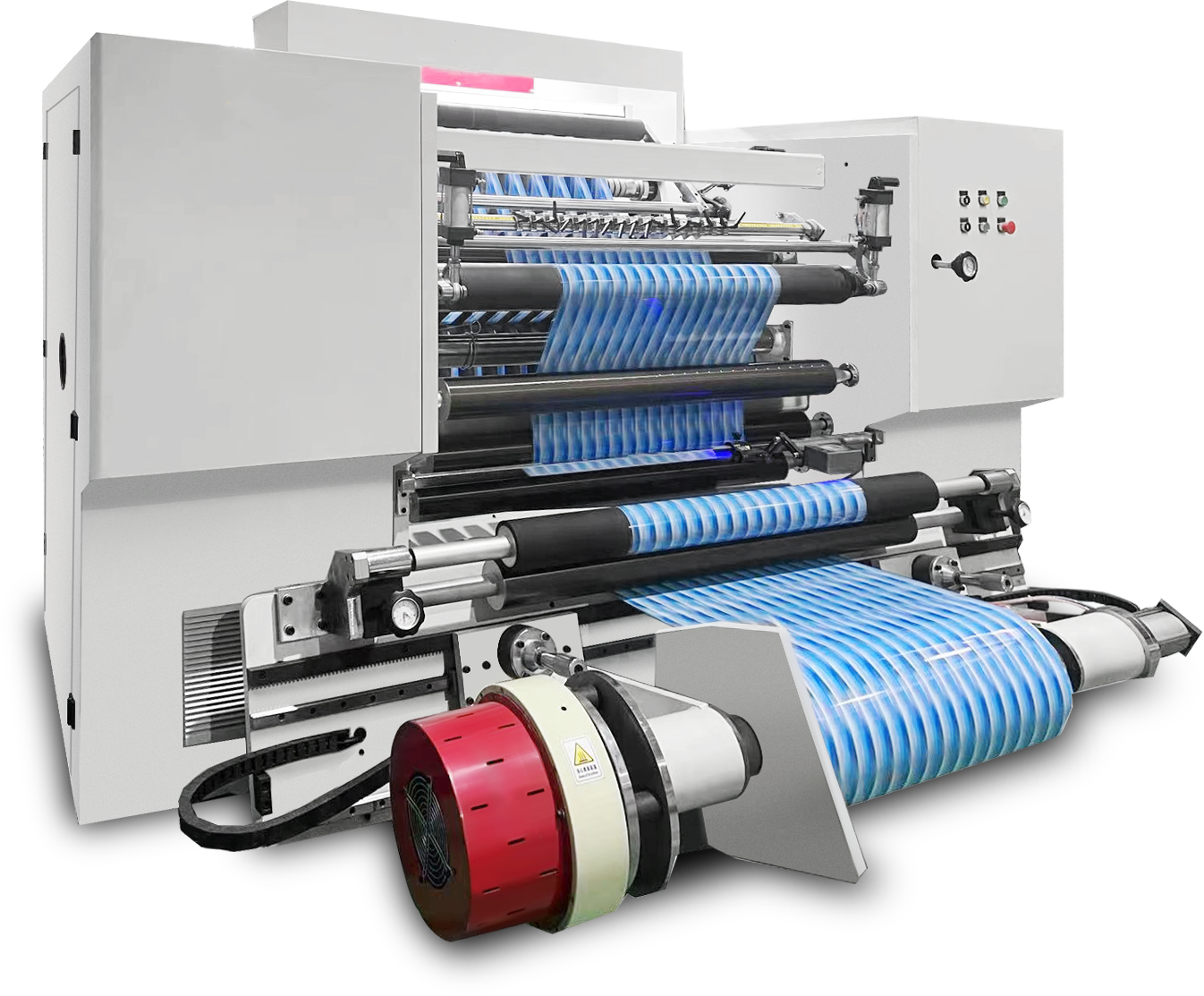
The slitting and rewinding process serves as the final critical step before film packaging reaches the customer. Poor execution leads to telescoped rolls, edge distortion, and wasted yield. Manufacturers often treat this finishing phase as an afterthought. However, using poorly matched equipment severely degrades product quality. It stretches materials, creates uneven edges, and generates costly rejects.
We created this guide to provide a pragmatic, engineering-focused framework for evaluating these systems. You will learn how to shift away from generic procurement strategies. Instead, you can adopt an application-specific selection process. We factor in downstream process requirements and distinct material behaviors. You will discover how tension control, slitting mechanisms, and automation directly impact your daily operations. By understanding these core engineering principles, you can confidently specify equipment tailored exactly to your flexible film applications.
Key Takeaways
Tension control capabilities differentiate standard models from high-performance machines; closed-loop systems are mandatory for stretchable films.
Blade selection (razor vs. shear) and rewind shaft type directly impact edge quality and roll consistency for varying film substrates (PET, BOPP, PE).
Machine integration must account for upstream equipment speeds and web handling requirements.
Total cost of ownership (TCO) hinges on automation levels—balancing initial capital expenditure against reduced setup times and operator dependency.
Identifying Production Bottlenecks and Material Constraints
Before purchasing new equipment, you must evaluate your current production floor. A generic machine cannot solve highly specific material handling issues. You need to map existing failures directly to mechanical limitations.
Assessing Current Yield Losses
Pinpoint exact failure modes in your existing setups. Common issues include gauge bands, web wandering, and roll crushing. Gauge bands occur when minor film thickness variations compound over hundreds of layers. This creates hard ridges on the finished roll. Web wandering points to inadequate edge guiding or misaligned idler rollers. Crushing usually happens when rewind tension is too high for delicate substrates. Identifying these specific defects helps you determine which machine upgrades are strictly necessary.
Common Mistake: Operators often mask machine deficiencies by drastically slowing down line speeds. This temporary fix hides underlying tension control failures but destroys overall shift productivity.
Material Variables
Specific film characteristics heavily dictate machine requirements. You must define these parameters clearly. Thickness variation is common in blown films and requires specialized rewind shafts. Elasticity demands highly responsive tension zones to prevent permanent stretching. Slip additives can reduce the friction required to drive the web. They often necessitate specialized roller coatings to prevent slippage.
PET and BOPP: High tensile strength, requires robust shear slitting.
LDPE and LLDPE: Highly stretchable, demands ultra-sensitive tension zones.
Metallized Films: Sensitive to scratching, requires driven rollers and specialized surface treatments.
Volume and Changeover Realities
You must differentiate between continuous high-volume runs and environments requiring frequent changes. High-volume runs prioritize top mechanical speeds and large roll capacities. Conversely, short-run operations demand rapid setups. Frequent width or material changes require different automation levels. Manual knife positioning wastes hours in a high-mix environment. Understanding your daily changeover frequency dictates your required automation level.
Core Evaluation Dimensions for a Slitting and Rewinding Machine
Selecting a high-performance slitting and rewinding machine requires a deep dive into its core components. The right configuration prevents material waste and ensures perfect roll geometry.
Tension Control Systems
Tension control determines roll quality. You must contrast open-loop versus closed-loop systems. Open-loop systems use a pre-set diameter calculation to decrease tension as the roll grows. They lack real-time feedback. Closed-loop systems use load cells or dancer rollers. They constantly measure actual web tension and adjust brakes or motors instantly. Closed-loop control is absolutely mandatory for stretchable films.
You also need individual differential friction shafts for film rolls. Raw films rarely have a perfectly uniform thickness across the web profile. Standard solid shafts force all slit rolls to rotate at the identical speed. Thicker rolls wind tighter, while thinner rolls become loose. Differential friction shafts solve this. They use internal pneumatic bladders to push friction rings outward. Each slit roll can slip independently. This manages thickness variations across the web profile perfectly.
Slitting Mechanisms
The cutting method you choose impacts edge quality, blade life, and dust generation. You must select the mechanism based on your primary substrates.
Razor Slitting
Razor slitting offers exceptional cost-efficiency. It uses inexpensive blades held at an angle to slice the web in mid-air or against a grooved roller. You should evaluate this method for standard thin films like PE or soft laminates. Blade replacement is fast and cheap. However, blade life is relatively short. Dull blades create stretched edges and poor roll appearance.
Shear Slitting
Shear slitting operates like a pair of scissors. It uses a rotating top blade and a driven bottom anvil. Analyze shear requirements for thicker, laminated, or rigid films. Precise edge quality and dust minimization are critical here. Shear cutting prevents the melted edges often seen when using razors on tough plastics. The initial cost is higher, but the cut quality is vastly superior for challenging materials.
Slitting Mechanism
Best For
Primary Advantages
Common Drawbacks
Razor in Air
Thin, highly stretchable films
Low cost, rapid changeover
Short blade life, poor on thick films
Razor in Groove
Standard packaging films
Better web support than air slitting
Groove alignment requires precision
Shear Slitting
Rigid films, laminates, paper
Excellent edge quality, low dust
Higher cost, longer setup times
Web Guiding and Edge Trimming
Crooked rolls are unacceptable in modern packaging. Your web guiding system must keep the material perfectly aligned before it hits the knives. Evaluate ultrasonic versus optical edge sensors carefully. Optical sensors excel at tracking printed lines. However, they fail on clear or highly reflective films. Ultrasonic sensors bounce sound waves off the material edge. They work flawlessly regardless of film opacity or print registration.
You must also outline trim extraction systems. Slitting generates continuous edge trim. Your extraction blower needs adequate capacity to pull this waste away instantly. If the vacuum drops, trim gets pulled into the finished roll, destroying the product.
Aligning Equipment with Upstream Production Lines
A finishing machine does not operate in isolation. You must integrate it seamlessly with your upstream processes. Mismatched speeds or tension profiles will bottleneck your entire factory.
Post-Extrusion Integration
Managing web dynamics is critical when processing raw rolls directly from a Film Blowing Machine. Extruded films often exhibit cooling variations. These variations create slight baggy edges or camber. Your finishing equipment needs robust spreader rollers (bowed rollers) to flatten the web before slitting. You must focus on these primary roll characteristics to avoid wrinkling.
Post-Print Processing
Slitting converted rolls coming off a Flexographic Printing Machine presents different challenges. Maintaining print registration is the top priority. The web guide must track the printed line, not the physical material edge. You also need specialized low-friction roller coatings. These minimize ink transfer and prevent scratching on freshly printed surfaces.
Speed Synchronization
You must ensure your Slitting Machine matches the throughput of upstream processes. However, raw speed is useless without control. Intelligently buffering the throughput requires precise motor synchronization. The unwind and rewind drives must communicate flawlessly. They must accelerate and decelerate together without compromising tension profiles. Sudden stops often cause web breaks if the drives are poorly synchronized.
Best Practice: Always specify drive systems from a single reputable manufacturer (e.g., all Siemens or all Yaskawa drives). Mixed component brands often suffer from communication latency during rapid deceleration.
Automation Levels vs. Implementation Realities
Automation reduces labor dependence and increases output. However, it also adds mechanical complexity. You must balance the productivity gains against your actual operational needs.
Manual vs. Automated Knife Positioning
Calculate the true return on investment for automatic slitting setups. You must base this on your daily changeover frequency. If your operators change slit widths once a week, manual positioning works fine. If they change widths five times a shift, manual setups waste hours. Automated knife positioning uses servo motors to place razor or shear blades in seconds. This eliminates human measurement errors and drastically increases machine uptime.
Turret Rewinders
Turret rewinders feature two sets of rewind shafts. Assess the productivity gains of this continuous operation. While one set of rolls is winding, the operator unloads the finished set on the opposite side. When the roll reaches its target length, the machine automatically cuts the web, indexes the turret, and starts winding the new cores. This nearly eliminates downtime between sets. However, you must weigh this against the increased mechanical complexity and larger floor footprint.
Core Positioning and Roll Unloading
Film rolls are incredibly heavy. Evaluate the ergonomic risks and labor costs associated with manual offloading. Operators risk back injuries when wrestling large rolls off shafts. Automated systems mitigate this. Laser core positioning guides operators to place new cores instantly. Automated pusher systems gently slide finished rolls onto a receiving tree. Robotic handling can then move the rolls directly to pallets. These systems protect workers and accelerate the unloading phase.
Risk Mitigation Strategies
Capital equipment investments carry inherent risks. You must evaluate the operational realities of running and maintaining complex machinery over its lifespan.
Operator Dependency
Acknowledge the growing skill gap in operating complex machinery. Veteran operators are retiring, and new hires lack deep mechanical intuition. You must evaluate the machine's HMI (Human-Machine Interface). An intuitive touchscreen is critical for troubleshooting. Look for systems featuring recipe storage. Operators can select a specific film type from a menu, and the machine automatically sets the correct tension profiles, nip pressures, and taper values. This drastically reduces setup errors.
Maintenance and Wear Parts
Audit the availability of replacement parts before signing a contract. Proprietary components force you to buy expensive replacements directly from the manufacturer. Off-the-shelf parts (like standard pneumatic clutches, servo brakes, and industrial blades) are far superior. You can source them locally to prevent extended downtime. Ensure your maintenance team can easily access the internal drive belts and lubrication points.
Safety and Compliance
Industrial machinery poses severe crush and laceration hazards. Ensure standard safety guarding is robust and tamper-proof. Light curtains must protect the rewind zones. If an operator breaks the light beam, the machine must halt instantly. Emergency stop protocols must meet regional industrial standards (such as CE or OSHA requirements). Never compromise on safety features to reduce the initial purchase price.
Conclusion
Selecting the right equipment dictates the quality of your final product. You must prioritize tension control and material compatibility over theoretical maximum running speeds. A machine running at 600 meters per minute is useless if it produces crushed, unsellable rolls. Evaluate your primary substrates, calculate your changeover frequency, and choose the slitting mechanism that matches your daily reality. Invest in automation only where it explicitly solves a bottleneck.
Finally, we strongly recommend establishing a rigorous vendor testing protocol. Never buy a machine based purely on a brochure. Mandate sample runs using your specific film substrates before finalizing any purchase order. Send your most challenging materials to the manufacturer. Evaluate the edge quality and roll hardness of the test runs. This evidence-based approach guarantees your new equipment will perform perfectly on your production floor.
FAQ
Q: What is the difference between center winding and surface winding for film rolls?
A: Center winding drives the core shaft directly. It is best for delicate or stretchable films because it prevents surface scratching. Surface winding drives the roll via contact with a motorized drum. It is better for heavy, non-stretch materials where tight, high-density rolls are required.
Q: How do differential rewind shafts prevent telescoping in flexible films?
A: They allow individual slit rolls on the same shaft to slip at varying rates. This slip compensates for minor web thickness inconsistencies. It ensures uniform tension is maintained across all finished rolls, preventing loose winding and telescoping.
Q: Can one slitting and rewinding machine handle both stretch film and rigid laminates?
A: Yes, but it requires a modular setup. You will need interchangeable slitting sections (razor and shear) and highly programmable tension control zones. This versatility significantly increases the initial capital expenditure.
Q: What is the standard installation and commissioning timeline for industrial slitting equipment?
A: Typically 2 to 4 weeks onsite. This assumes all site prep (foundation, power, pneumatics) is complete prior to arrival. It is usually followed by 1 to 2 weeks of dedicated operator training.