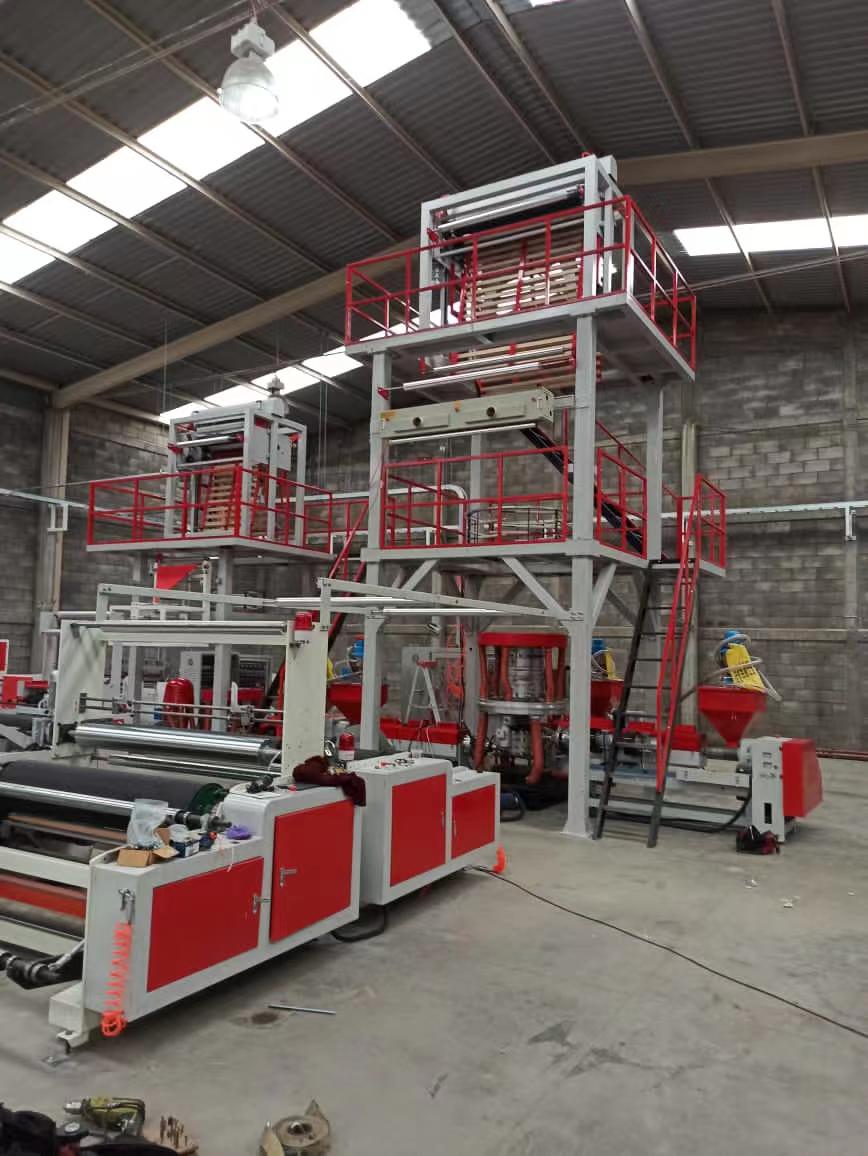
Producing agricultural and greenhouse films requires exact control over mechanical strength. You must also balance light transmission and weatherability. Standard extrusion equipment often fails here. They struggle to meet the strict width requirements. They also lack the material blending precision needed for modern agricultural applications. The core challenge lies in balancing capital expenditure. Plant managers must process complex formulations without sacrificing film uniformity. These formulations include metallocene, EVA, and anti-UV additives. We designed this guide to help you navigate these specific hurdles. It provides plant managers and procurement teams with an evidence-based framework. You will learn how to evaluate and shortlist the right equipment. We focus on machine configuration, extrusion capacity, and long-term operational value. By the end of this guide, you will know exactly how to structure your equipment sourcing strategy for optimal performance.
Key Takeaways
Application dictates configuration: Ultra-wide greenhouse films demand specialized die heads and high-performance Internal Bubble Cooling (IBC) systems.
Coextrusion is the baseline: A 3 layer coextrusion blown film machine optimizes raw material costs by isolating expensive UV and IR additives to specific layers.
Waste management impacts ROI: Integrating a Plastic Recycling Machine for edge trim recovery drastically reduces long-term operational costs.
Facility constraints matter: Tower height and cooling infrastructure must be verified before evaluating high-output machine specifications.
1. Defining Film Specifications to Establish Machine Requirements
Before evaluating any extrusion hardware, you must define your exact film specifications. Film width and thickness tolerances dictate the entire machinery setup. A high-quality agricultural film blowing machine must handle strict production metrics continuously.
Determine maximum required lay-flat width: Greenhouse films often range from 2 meters to over 16 meters when unfolded. You must size your die head and haul-off unit accordingly.
Assess acceptable thickness variations: This metric is known as gauge tolerance. Strict tolerance prevents weak spots in the polymer. Weak spots can cause catastrophic tearing during field deployment. They also create a "lensing effect" where uneven sunlight burns the crops below.
Calculate your required output: Match your desired output in kilograms per hour with your facility infrastructure. High throughput generates massive heat.
Material formulations also require deep evaluation. You must verify the extruder’s ability to process high percentages of mLLDPE (Metallocene Linear Low-Density Polyethylene). This material provides crucial puncture resistance against hail and animal interference. You also need to evaluate EVA (Ethylene Vinyl Acetate) processing capabilities. EVA retains thermal energy within the greenhouse during cold nights.
Furthermore, the machine must manage high-viscosity masterbatches. These include anti-UV stabilizers and anti-fog additives. Heavy masterbatches often cause pressure surges if the screw design is inadequate.
What to watch out for: You must match your target output with the physical limits of ambient air. Chilled air availability in your facility is a hard constraint. If you lack adequate cooling capacity, your bubble will become unstable, limiting your maximum production speed.
Microclimate moisture control, preventing water droplets on crops
2. Why the 3 Layer Coextrusion Blown Film Machine is the Industry Standard
Mono-layer extrusion is largely obsolete for advanced greenhouse films. A multi-layer approach offers superior cost control and physical properties. Strategic layering drives raw material efficiency across your production line.
The outer layer focuses purely on weather resistance. It holds the expensive anti-UV additives and dust repulsion agents. The middle layer provides brute mechanical strength. It primarily uses mLLDPE and EVA blends. The inner layer controls the greenhouse microclimate. It utilizes specialized anti-drip and anti-fog surfactants. These surfactants force condensation to form a continuous sheet of water rather than harmful droplets.
This strategic separation improves your overall return on investment. A 3 layer coextrusion blown film machine prevents additive waste. You do not need to mix costly functional masterbatches throughout the entire film matrix. You isolate them exactly where they function best. This lowers your per-kilogram production costs drastically compared to outdated mono-layer machines.
Film integrity also benefits significantly from coextrusion. Multi-layer structures naturally mask localized pinholes. A micro-defect in one layer gets covered by the adjacent solid layer. This creates a stronger barrier. It reduces the risk of catastrophic tearing in high-wind agricultural environments.
Common Mistakes: Do not over-specify the middle layer with expensive UV additives. Some operators blend UV protection into the core layer unnecessarily. Keep costly functional masterbatches strictly in the outer and inner skins to maximize profitability.
3. Evaluating Core Extrusion Configurations and Components
You must evaluate specific mechanical components closely. Nameplate capacity means little without robust core engineering. Pay attention to the melting, distribution, and cooling phases.
Extruder Screws and Barrels
Agricultural films use highly thermally sensitive additives. You must look for bimetallic screws. Manufacturers design them for high-shear, low-temperature melting. This prevents the degradation of delicate agricultural masterbatches during extrusion. You should also check the L/D (Length to Diameter) ratios carefully. A ratio of 30:1 or 32:1 is usually suitable for high-output polyolefin blending. A longer barrel ensures a homogeneous melt without overheating the polymer.
Die Head Technology for Wide Films
Ultra-wide films require perfect melt distribution. Assess the spiral mandrel die design carefully. Poor die design causes pressure drops. It creates uneven flow lines across the wide film. These weld lines become weak points in the field. You must verify die rotation capabilities. Oscillating haul-offs or rotating dies distribute gauge bands evenly across the finished roll. This prevents bulging and ensures a perfectly flat roll profile.
Internal Bubble Cooling (IBC) and Air Rings
IBC is mandatory for high-capacity agricultural film. It controls internal air exchange to cool the heavy bubble rapidly. You must evaluate the vendor's sensor integration. Ultrasonic sensors provide crucial bubble stability by measuring the bubble diameter continuously. Furthermore, dual-lip air rings are essential. They provide sufficient aerodynamic hold for heavy, wide bubbles, preventing swaying and instability.
Performance Feature
Without IBC
With Advanced IBC Integration
Cooling Efficiency
Low (Relies on exterior ambient air only)
High (Active internal cold air exchange)
Maximum Output Capacity
Limited severely by external cooling rates
Increased by 20% to 30% on average
Bubble Stability
Prone to swaying and manual correction
Highly stable, locked by acoustic sensing
Film Width Control
Requires manual operator adjustment
Fully automated dimensional control
4. Integration, Scrap Reduction, and Circular Economy
Efficient material handling dramatically improves your bottom line. Scrap reduction is critical when processing expensive greenhouse polymers. You cannot afford to waste metallocene or HALS additives.
Edge trim and winding mechanics require deep scrutiny. Assess the heavy-duty surface friction winders carefully. They must feature precise tension control mechanisms. Wide agricultural rolls become incredibly heavy. The winder must apply a decreasing tension taper as the roll grows. This allows the machine to handle heavy rolls without stretching the film. Stretching compromises the thickness and ruins the mechanical properties.
Scrap recovery systems offer massive operational savings. Factor in the immediate integration of an offline or inline Plastic Recycling Machine. Calculate the ROI of immediately re-pelletizing your edge trim. A dedicated cutter compactor can handle fluffy trim efficiently. You can then feed this recycled startup scrap straight back into the core layer of the Film Blowing Machine.
Automation elevates your quality control standards. Evaluate gravimetric dosing systems closely. They guarantee precise additive control by weighing materials continuously. This saves expensive masterbatch from being overfed. Look for inline thickness measurement systems. Capacitance or gamma backscatter sensors act as industry standards. They automate air ring adjustments, keeping gauge variations consistently below 3%.
Best Practices for Waste Management:
Always keep edge trim clean and dry before routing it to the recycling unit.
Use precision gravimetric blenders to mix recycled pellets back into the virgin resin accurately.
Calibrate thickness sensors weekly to avoid false readings and material drift.
Schedule preventive maintenance on winder tension controllers to prevent roll telescoping.
5. Vendor Shortlisting, Cost Efficiency, and Implementation Risks
Purchasing large-scale equipment involves significant implementation risks. You must evaluate facility constraints and long-term operating efficiencies thoroughly. Nameplate capacity is just a starting point.
Facility Readiness involves overcoming the "Tower Constraint". Wide agricultural films require extreme tower heights. The polymer must cool adequately before it hits the nip rollers. A 16-meter folded film might require a structural tower exceeding 15 meters in height. Verify your clear factory height meticulously before shortlisting any large equipment. Failing to do so results in costly facility modifications.
Energy consumption profiling is another major factor. Do not rely solely on installed power ratings. Demand actual kW/kg consumption data from the manufacturer under typical running conditions. Evaluate the energy efficiency of the primary AC motors. Ensure they use Variable Frequency Drives (VFDs). Check for solid-state heating relays. They cycle power much more efficiently than traditional mechanical contactors, reducing your electricity bills.
Finally, assess vendor support and Standard Operating Procedures (SOPs). Evaluate the manufacturer’s installation network. Operator training is absolutely crucial for complex multi-layer setups. Confirm the immediate availability of critical spare parts. These include ceramic heaters, thermocouples, and screen changers. Request reference sites from the vendor. Speak to plant managers currently operating the machine at your exact target width and output.
Conclusion
Selecting the right equipment requires moving past basic nameplate capacities. You must evaluate die head precision, cooling efficiency, and multi-layer material distribution comprehensively.
Prioritize vendors who offer transparent performance data on their coextrusion configurations. They should provide clear integration paths for quality control automation and scrap recycling systems. Robust internal cooling and precise gravimetric dosing will safeguard your material margins over the machine's entire lifespan.
Take action today by auditing your current facility height and internal cooling capacity. Reach out to qualified manufacturers for a customized line configuration analysis. Base this analysis strictly on your specific greenhouse film width and complex material formulation requirements.
FAQ
Q: What is the maximum width an agricultural film blowing machine can produce?
A: Advanced machines can produce unfolded films exceeding 16 to 20 meters. They achieve this by utilizing complex gusseting and multi-fold winding techniques. The physical limit depends heavily on die head size, cooling tower height, and haul-off stability.
Q: Why choose a 3-layer machine over a mono-layer for greenhouse films?
A: A 3-layer setup dramatically reduces costs by isolating expensive additives. You can place UV stabilizers purely on the outside and anti-drip agents on the inside. It also improves structural integrity by masking localized pinholes, preventing wind tears.
Q: Can a standard film blowing machine process EVA materials?
A: Standard machines often struggle with EVA due to its thermal sensitivity. Processing EVA requires specialized low-temperature, high-shear bimetallic screws. You also need highly accurate temperature control zones to prevent the material from degrading or cross-linking inside the barrel.
Q: How does a plastic recycling machine integrate with film blowing?
A: You can integrate it inline or offline. Inline systems automatically pull edge trim directly into a small extruder, feeding pellets back into the primary machine's hopper. Offline systems batch-process startup scrap and rolls into high-quality pellets for later reuse.