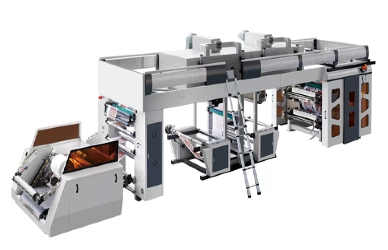
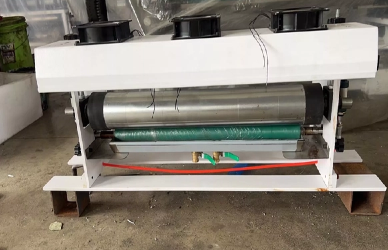
Printing technologies have evolved significantly over the centuries, from the invention of the printing press to today’s advanced digital and offset methods. Among the most widely used techniques are 4 Color Printing Machines and Flexographic Printing Machines, each serving distinct purposes and industries.
Understanding the differences between these printing machines is crucial for selecting the right solution for specific needs. Whether you’re focused on high-quality color reproduction or large-scale production, choosing the correct technology can greatly impact efficiency and output.
In this article, we will compare the key differences between 4 Color Printing Machines and Flexographic Printing Machines, helping you make an informed decision on which method best suits your project.
What is a 4 Color Printing Machine?
1.Definition and How It Works
A 4 Color Printing Machine uses four primary colors—Cyan (C), Magenta (M), Yellow (Y), and Black (K)—to create full-color prints. This process, known as CMYK printing, allows for a wide range of colors by layering these four inks. Each color is printed separately in precise steps, building up the final image through overlapping layers.
2.The 4 Primary Colors
Cyan (C): A blue-green color, used for cool tones.
Magenta (M): A red-pink color, important for warm tones and purples.
Yellow (Y): Forms the base for bright, light tones.
Black (K): Adds depth and contrast to the image.
These four colors are combined in varying amounts to reproduce a full spectrum of shades.
3.Common Applications
Commercial Printing: Brochures, business cards, and posters.
Packaging: Labels, food packaging, and product boxes.
Advertising: Billboards, flyers, and banners.
Publications: Magazines and photo books.
4.Advantages of 4-Color Printing
Color Accuracy: Produces precise, vibrant colors for detailed designs.
Versatility: Can print on various materials like paper, cardboard, and non-absorbent surfaces.
Rich Detail: Captures complex images with fine gradients and shading.
Cost-Effective: Ideal for large print runs due to lower cost per unit.
Consistency: Ensures color consistency across different print jobs.
What is a Flexographic Printing Machine?
1.Definition and How It Operates
A Flexographic Printing Machine (Flexo) uses flexible plates and fast-drying inks to print on various substrates, including paper, plastic, and cardboard. It transfers ink from raised images on flexible plates to the substrate, allowing high-speed, high-volume printing with the ability to print on a wide range of materials.
2.How the Flexographic Printing Process Works
Plate Preparation: Flexible plates made of rubber or photopolymer are mounted on cylinders.
Inking: Ink is applied to the plates using an anilox roller, ensuring even distribution.
Printing: The inked plate transfers the image onto the substrate.
Drying: Fast-drying inks or UV light quickly dry the print to allow for fast production.
Repetition: This process is repeated for each color in multi-color jobs.
3.Common Applications
Packaging: Food and beverage packaging, corrugated boxes, and flexible bags.
Labels: Adhesive labels for products, bottles, and cans.
Newspapers and Magazines: High-volume printing for newsprint and periodicals.
Textiles: Printing on fabrics, such as for labels or clothing.
Plastic Films: Printing on films and wraps for consumer goods.
4.Differences Between Flexographic Printing and Other Methods
Flexographic vs. Offset Printing: Flexo is better for non-porous, flexible materials, while offset is best for smooth, flat surfaces like paper.
Flexographic vs. Screen Printing: Flexo offers more precision and versatility, especially for multi-color prints, while screen printing is better for large, bold designs.
Flexographic vs. Digital Printing: Digital printing is great for short runs and custom prints, while flexo excels at large-volume, high-speed production.
Flexographic vs. Gravure Printing: Gravure is better for high-quality image reproduction in long runs, but flexo offers more material flexibility and faster drying.
5.Advantages of Flexographic Printing
High-Speed Production: Ideal for large-volume jobs with quick turnaround times.
Material Versatility: Can print on a variety of materials, including paper, plastics, and metal foils.
Cost-Effective: Efficient for large print runs, especially in packaging.
Eco-Friendly: Uses water-based or UV inks, reducing harmful emissions compared to other methods.
Key Differences Between 4 Color Printing Machine and Flexographic Printing Machine
1. Printing Technology
4 Color Printing Machine: Based on offset printing, uses 4 primary inks (Cyan, Magenta, Yellow, Black) to create full-color prints. It's precise and ideal for high-quality commercial printing.
Flexographic Printing Machine: Uses flexible plates and fast-drying inks. Suitable for printing on a wide range of substrates, including non-porous materials like plastic and metal.
2. Materials
4 Color Printing Machine: Primarily for flat, smooth materials like paper and card stock. Best for precise prints on absorbent surfaces.
Flexographic Printing Machine: Can print on varied materials such as paper, plastics, foils, and corrugated board, making it ideal for packaging and labels.
3. Printing Speed
4 Color Printing Machine: Suited for medium to high-volume production, but speed is secondary to precision. Best for detailed, high-quality prints.
Flexographic Printing Machine: Known for high-speed production, particularly in large-scale printing like packaging and labeling, where quick turnaround is crucial.
4. Color Performance
4 Color Printing Machine: Offers high color accuracy and is perfect for detailed, complex images, such as photographs or intricate designs.
Flexographic Printing Machine: Delivers good color quality, but might not be as precise as 4-color printing, especially for intricate images. Best for vibrant prints on packaging.
5. Cost and Maintenance
4 Color Printing Machine: Higher setup and maintenance costs, but excels in quality and precision, making it ideal for premium commercial jobs.
Flexographic Printing Machine: More cost-effective for high-volume runs, especially in packaging, with lower setup and maintenance costs.
Pros and Cons of 4 Color Printing Machine vs Flexographic Printing Machine
1. Pros and Cons of 4 Color Printing Machine
Pros:
High-Quality Color: Excellent for precise color reproduction and detailed designs (ideal for photos and complex graphics).
Best for Commercial Printing: Suitable for high-quality prints like brochures and magazines.
Cons:
Higher Costs: Setup and operational costs are higher, especially for smaller runs.
Slower Production Speed: Ideal for medium to high-volume but not as fast as flexo.
Limited Substrates: Works best on smooth, flat materials, not flexible or irregular surfaces.
2. Pros and Cons of Flexographic Printing Machine
Pros:
Fast Production: High-speed printing, great for large-volume runs like packaging.
Wide Material Compatibility: Can print on a variety of substrates, including plastic, paper, and foil.
Cost-Effective for Large Volumes: Lower cost for mass production compared to 4-color printing.
Cons:
Less Color Precision: May not offer the same color accuracy or detail for fine designs.
Not Ideal for Photos: Less suited for high-quality photographic prints or intricate images.
Industries Using 4 Color Printing vs Flexographic Printing
1.Industries That Use 4 Color Printing
Commercial Printing: Used for high-quality brochures, books, and posters where color accuracy and detail are crucial.
Premium Packaging: Ideal for luxury packaging like cosmetic boxes and high-end product packaging, where visual appeal matters.
Marketing Materials: Perfect for catalogs, business cards, and sales brochures that need vibrant, precise colors.
2.Industries That Use Flexographic Printing
Packaging: Common in food, beverage, and consumer goods packaging, including plastic, cardboard, and metal.
Labels: Widely used for product labels on bottles, cans, and jars.
Flexible Packaging: Ideal for plastic films, shrink wraps, and stand-up pouches.
Corrugated Boxes: Used in shipping and bulk packaging, especially for large boxes.
Conclusion
4 Color Printing Machines are perfect for high-quality, detailed prints and are commonly used in commercial printing and premium packaging. They provide excellent color accuracy and are ideal for intricate designs. On the other hand, Flexographic Printing Machines are faster, more cost-effective for large-volume production, and can print on a wider range of materials like plastic and corrugated boxes. When deciding between the two, businesses should consider factors like print quality, production speed, and material type. Both printing technologies have their place in the industry and are constantly evolving with new advancements to meet diverse business needs.