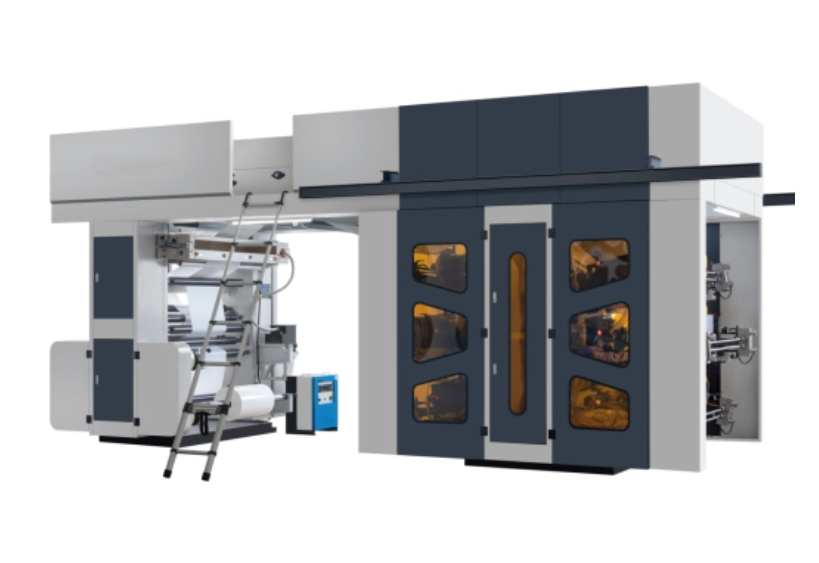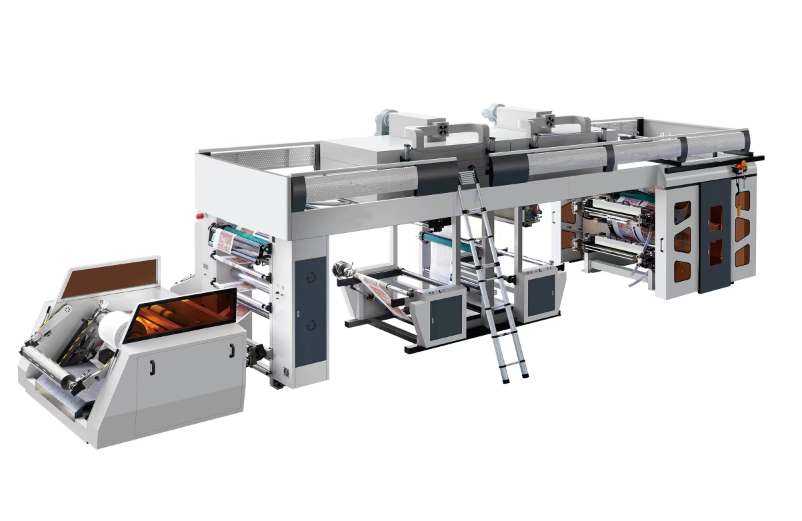
Choosing the right flexo printing machine is not only about how many color stations a press has. For most converters and packaging businesses, the more important question is which configuration best matches actual order types, substrate range, print expectations, and future growth plans.
A 4 color flexo printing machine, a 6 color flexo printing machine, and an 8 color flexo printing machine can all be good investments, but they serve different production priorities. A lower-color configuration may be more efficient for routine bag printing and simple packaging work, while a higher-color press may be more suitable for premium packaging, stronger visual requirements, or a broader customer mix.
That is why the right choice should start with order structure rather than machine size alone.
What Color Stations Mean in Flexo Printing
In flexographic printing, each color station adds one more printing unit to the machine. More stations generally allow more flexibility in color layout, overprint structure, brand presentation, and visual complexity.
However, more color stations also bring:
higher equipment cost
more setup steps
more register control requirements
more demanding operator management
greater drying and process coordination needs
This means the best machine is not always the one with the most colors. It is the one that can handle the real job mix efficiently and profitably.
A Practical Comparison at a Glance
| Configuration | Typical Best Fit | Main Strength | Main Limitation |
| 4 colors | Simple bag printing and standard packaging | Lower cost and easier operation | Limited flexibility for complex graphics |
| 6 colors | Broader packaging orders and growing print demands | Good balance of capability and investment | More setup and process control than 4 colors |
| 8 colors | Premium packaging and visually demanding jobs | Greater color flexibility and stronger packaging appearance | Highest complexity and investment |
When a 4 Color Flexo Printing Machine Makes the Most Sense

A 4 color flexo printing machine is often the most practical option for converters handling straightforward bag and packaging work. It is usually well suited to:
For many factories, 4 colors are enough to cover the majority of regular orders without creating unnecessary setup burden or machine cost. If the design work is mainly built around simple layouts, brand marks, basic patterns, and limited color combinations, this configuration often provides the best efficiency.
It is also a sensible choice when buyers want a machine that is easier to manage in daily production while still supporting mainstream flexible-printing jobs.
When 6 Colors Become the Better Balance

A 6 color flexo printing machine is often the most balanced solution for businesses that are moving beyond basic print jobs but are not yet fully focused on premium multi-color packaging.
This configuration is commonly preferred when the factory needs:
stronger flexibility in artwork handling
better support for more varied customer jobs
more room for brand packaging work
improved color arrangement without going to the highest investment level
a practical upgrade path from lower-color equipment
For many converters, 6 colors offer the most commercially balanced position. It expands the order range significantly without introducing the full cost and operating complexity of an 8-color line.
This is often the right point where a company can take on more demanding work while still maintaining good control over production cost and setup time.
When an 8 Color Flexo Printing Machine Is Worth It
An 8 color flexo printing machine is usually justified when packaging appearance becomes a major competitive factor. This includes:
premium retail packaging
visually rich branded film
more complex design layouts
customers with stronger print-quality expectations
orders requiring more color flexibility and presentation depth
In these cases, the higher number of stations can support more sophisticated packaging output and stronger visual appeal. That can help converters serve customers who care more about shelf impact, visual branding, and detailed print design.
However, this configuration makes sense only when the business can really use it. If the majority of orders are still simple bag jobs or price-driven packaging work, an 8-color press may create more cost than practical return.
How Color Count Affects Real Production
Color count should never be judged in isolation. In daily production, the best choice also depends on:
A higher-color machine may look more attractive in theory, but if the real challenge in production is speed stability, setup efficiency, or substrate handling, the correct decision may depend as much on machine structure and control quality as on color count itself.
In other words, color count is important, but it is only one part of the productivity equation.
Matching Machine Configuration to Order Type
A useful way to compare the three options is to link them directly to order structure.
| Order Type | More Suitable Choice in Many Cases | Reason |
| Basic shopping bags and garbage bags | 4 colors | Enough for routine designs and easier cost control |
| Mixed customer work with moderate graphic demands | 6 colors | Better balance between flexibility and investment |
| Premium packaging and more complex design orders | 8 colors | Stronger color capacity and better support for high-end printing |
This comparison is often more helpful than asking which machine is “better.” The more useful question is which machine supports the jobs that actually drive the business.
Cost, Setup, and Long-Term Value
A lower-color machine may be the better business decision when:
most orders are simple
customers are cost-sensitive
setup speed matters more than advanced graphics
the business focuses on volume rather than premium print value
A higher-color machine may create better value when:
customers expect stronger visual quality
the order mix includes more complex packaging
the converter wants to move into higher-margin work
the company needs more room to grow into demanding markets
This is why the comparison should not be based only on machine price. It should be based on the relationship between machine capability and actual order value.
Common Mistakes Buyers Should Avoid
Buying based only on color count
More colors do not automatically mean better profitability. If the order mix does not need the extra stations, the machine may be oversized for the real business.
Ignoring current order structure
The best configuration should fit existing and near-future jobs, not only a theoretical long-term idea.
Overlooking setup complexity
Higher-color presses require more coordination, more register control, and more careful production management.
Focusing only on future possibilities
Growth matters, but a machine should still make commercial sense for current order demand.
Assuming premium machine equals better decision
The right investment is the one that fits the business model, not necessarily the one with the highest specification.
How to Make the Final Decision
The most effective way to choose between 4, 6, and 8 colors is to review actual orders.
A few practical questions usually make the answer clearer:
How many current jobs really need more than 4 colors?
Are customers increasingly asking for stronger packaging appearance?
Is the factory moving toward premium packaging or staying in high-volume routine work?
Is the goal to maximize simplicity, or to expand order flexibility?
Can the production team support a higher-complexity press efficiently?
If the business mainly handles standard bag and packaging jobs, a 4-color machine is often the most efficient solution.
If the order mix is becoming more varied, 6 colors often provide the best balance.
If premium packaging is becoming a core growth direction, 8 colors may be the more suitable long-term investment.
Final Thoughts
A 4 color flexo printing machine, 6 color flexo printing machine, and 8 color flexo printing machine each fit a different stage of business development.
4 colors are often best for straightforward, high-volume, mainstream work.
6 colors are often the strongest middle ground for converters that need more flexibility without overspending.
8 colors are usually best for premium packaging and more visually demanding print jobs.
The right choice depends less on the number itself and more on the type of orders the business wants to run efficiently. When the machine is matched to the real order structure, the investment decision becomes much easier.
For factories planning to improve printing capability, equipment selection works best when it is based on real production needs rather than only on headline specifications. A supplier that can support flexo printing, film blowing, bag making, slitting, and recycling as part of one connected production flow is often more useful than one that only focuses on a single machine. For businesses evaluating printing upgrades, discussing order type, substrate range, and downstream production plans early usually leads to a more suitable solution.
FAQs
1. Is a 4 color flexo printing machine enough for most bag-printing jobs?
In many cases, yes. For routine shopping bags, garbage bags, and simple packaging work, 4 colors are often enough to handle the required design without adding unnecessary complexity.
2. Why do many buyers choose 6 colors instead of moving directly to 8 colors?
Because 6 colors often provide a better balance between flexibility and cost. It gives more room for growing packaging demands without the full investment and production complexity of an 8-color press.
3. Is an 8 color flexo printing machine only for premium packaging?
Not only, but it is usually more suitable for jobs where packaging appearance, color richness, and stronger visual branding are important parts of the customer requirement.
4. Does a higher color count always mean better print quality?
Not necessarily. Print quality also depends on registration, drying, anilox selection, machine stability, substrate control, and operator skill. More color stations only provide more printing flexibility.
5. What should be reviewed before choosing a color configuration?
Order structure, artwork complexity, customer expectations, substrate range, production goals, and future business direction should all be reviewed before deciding between 4, 6, and 8 colors.